
How to Determine the Right Fleet Size and Composition for Your Distribution Network
Fleet sizing helps companies determine the right number and mix of vehicles to serve demand at the lowest total cost. This article shows how a network-level approach can balance owned and contracted capacity, improve vehicle utilization, support service performance, and match fleet composition to delivery requirements.
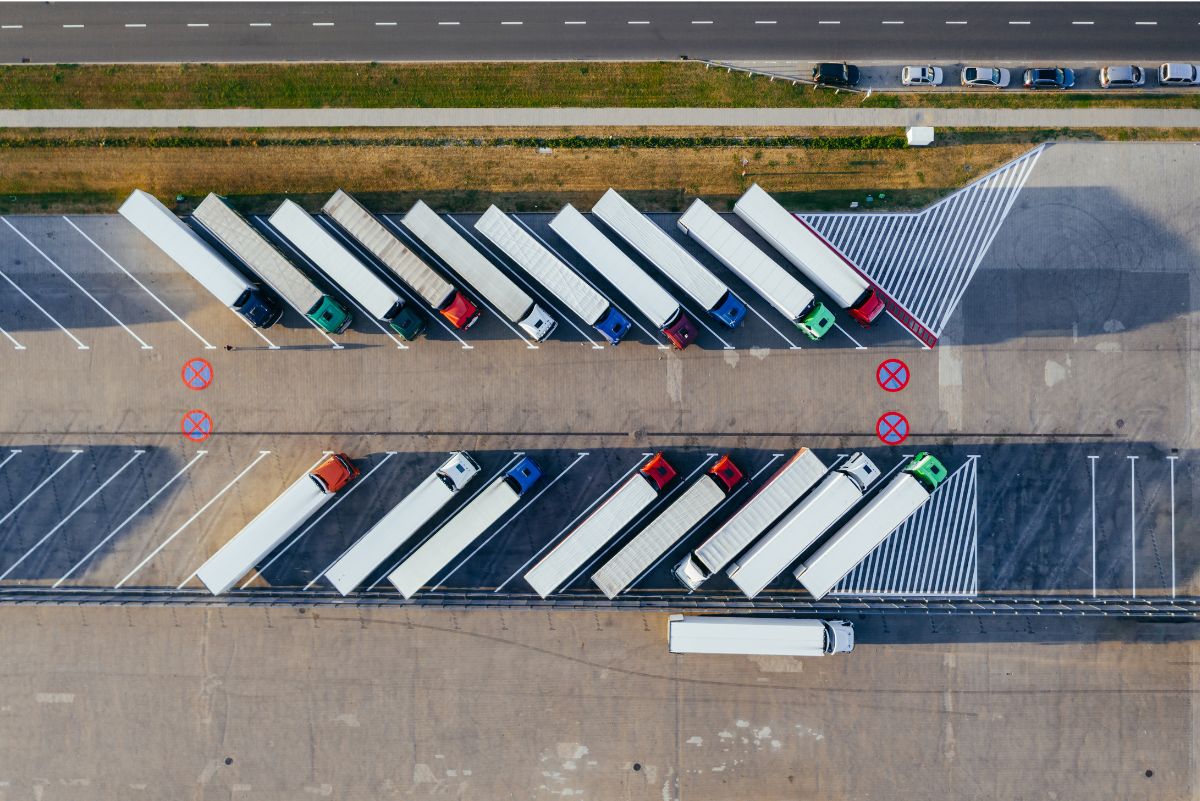
Why Fleet Sizing Matters
The size and composition of a distribution fleet is one of the most capital-intensive decisions in logistics management. Too many vehicles creates fixed cost that the volume does not justify, with assets sitting idle during off-peak periods and depreciating regardless of utilization. Too few vehicles creates service failures during peak demand, forces reliance on expensive spot carrier capacity, and limits the network’s ability to respond to demand growth or disruption. Fleet sizing is not a one-time procurement decision. It is an ongoing optimization problem that needs to reflect current and projected demand patterns, the service requirements the fleet must meet, the cost of owned versus contracted capacity, and the interactions between fleet composition and the distribution network structure it serves.
Why Fleet Sizing Is Challenging
The difficulty is that fleet requirements are driven by the interaction of demand volume, demand variability, geographic distribution, service time windows, vehicle capacity constraints, and routing efficiency simultaneously. A fleet sized for average demand will be insufficient during peaks and excessive during troughs. A fleet sized for peak demand will be chronically underutilized during normal periods. The right fleet size is the one that meets service requirements across the range of demand conditions the network faces at the lowest total cost including both owned fleet cost and supplementary contracted capacity.
The composition dimension adds further complexity. A fleet is not a homogeneous asset. Different vehicle types carry different volumes, serve different delivery profiles, and operate at different cost per unit delivered. The right mix of large vehicles for bulk trunk routes, medium vehicles for regional distribution, and small vehicles for dense urban delivery depends on the specific demand geography and service profile the network needs to cover. Optimizing fleet size without optimizing composition consistently produces a fleet that is sized correctly in aggregate but poorly matched to the specific demands of different parts of the network.
The Cost of Poor Fleet Sizing
Oversized fleets carry fixed cost continuously: depreciation, insurance, maintenance, and driver availability costs that persist regardless of whether vehicles are being used productively. Undersized fleets generate spot carrier cost during peaks, service failures when contracted capacity is unavailable at short notice, and a structural inability to grow without adding capacity reactively rather than proactively. The cost of getting fleet sizing wrong is not a one-time expense. It compounds across every operating period until the fleet composition is corrected.
Why Traditional Approaches Fall Short
Fleet sizing decisions in most organizations are driven by a combination of historical demand, operational judgment, and incremental additions triggered by specific service failures or growth events. The fleet is rarely sized and composed through a systematic optimization that models the full range of demand conditions the network faces, the routing efficiency implications of different vehicle mixes, and the cost trade-off between owned fleet capacity and contracted alternatives. The result is a fleet composition that reflects the history of individual procurement decisions rather than an analytically optimized response to the network’s actual requirements.
What Effective Fleet Sizing Requires
Supply chain leaders need a model that can translate demand patterns into vehicle requirements across the full range of operating conditions the network faces, evaluate the cost and service implications of alternative fleet size and composition options simultaneously, and identify the fleet configuration that minimizes total fleet and contracted capacity cost while meeting service requirements across the customer base.
A Practical Approach to Fleet Sizing
- Translate demand into vehicle requirements across the full range of operating conditions. Convert delivery volume and geography into vehicle load requirements by period, zone, and service tier. Model the full range of demand conditions the fleet needs to cover: average periods, seasonal peaks, promotional spikes, and demand growth projections over the planning horizon. This demand-to-vehicle translation is the foundation of fleet sizing because it reveals the range of capacity requirements the fleet must be able to serve.
- Define the vehicle types that match the delivery profile of the network. For each significant delivery zone and service tier, identify the vehicle type that best matches the load profile, geographic density, and service time window requirements. Large vehicles are most efficient on high-volume trunk routes with few stops. Smaller vehicles are most efficient in dense urban areas with many stops and short time windows. Matching vehicle type to delivery profile is as important as sizing the total fleet because a well-sized fleet of the wrong vehicle types will underperform on both cost and service.
- Optimize fleet size and composition against owned and contracted capacity cost. Model the cost of owning versus contracting capacity at each volume level across the demand range. For base demand that is predictable and consistent, owned fleet capacity is typically more cost-efficient than contracted alternatives. For peak demand that is variable and seasonal, contracted capacity may be more cost-efficient than owning assets that will be underutilized outside peak periods. The optimal fleet composition balances owned and contracted capacity to minimize total cost across the full demand range.
- Evaluate routing efficiency within the proposed fleet composition. Before finalizing fleet size and composition, model the routing efficiency achievable with the proposed fleet mix: vehicle utilization rates, average stops per route, and service window compliance across the delivery network. A fleet composition that looks efficient in aggregate may generate poor routing outcomes if vehicle types are mismatched to the delivery geography, which increases the number of vehicles needed to serve the same demand.
What Strong Fleet Sizing Looks Like
A well-sized fleet operates at productive utilization across the range of demand conditions the network faces, meets service requirements without systematic recourse to spot contracted capacity, and is composed of vehicle types that match the specific delivery profile of each part of the network. The fleet size and composition is reviewed regularly as demand patterns, service requirements, and vehicle economics evolve rather than being treated as a fixed capital decision between major procurement cycles.
Common Fleet Sizing Pitfalls to Avoid
- Sizing the fleet for average demand. A fleet sized for average conditions will be insufficient at peak and excessive in troughs, with the cost of peak spot capacity often exceeding the saving from not owning the peak capacity outright.
- Optimizing fleet size without optimizing composition. A fleet of the wrong vehicle types will underperform on routing efficiency regardless of how well it is sized in aggregate.
- Treating fleet sizing as a procurement decision rather than a network optimization. The right fleet size and composition depends on the routing structure, demand geography, and service requirements of the specific network, and those inputs need to be modeled rather than assumed.
How AIMMS Supports Fleet Sizing and Composition
AIMMS allows teams to translate demand patterns into vehicle requirements across the full range of operating conditions, evaluate alternative fleet size and composition options against owned and contracted capacity cost simultaneously, and model routing efficiency within the proposed fleet mix to ensure that vehicle types are well matched to the delivery geography they need to serve. The optimization tooling identifies the fleet configuration that minimizes total fleet and contracted capacity cost while meeting service requirements across the customer base, accounting for the interactions between fleet composition, routing efficiency, and contracted capacity cost that single-dimension fleet planning consistently misses. For organizations with complex multi-zone delivery networks, specific vehicle type requirements, or fleet sizing decisions that need to be evaluated alongside distribution network design and transport lane optimization, AIMMS supports fully tailored solutions on the same optimization foundation.
“Fleet sizing is not a question of how many vehicles the operation needs today. It is a question of how many vehicles of what types the operation needs across the full range of conditions it will face, balanced against the cost of owning capacity that will sometimes sit idle.”
The Outcome
Organizations that size and compose their fleet through network-level optimization operate with lower total fleet and contracted capacity cost, better vehicle utilization, and more consistent service performance than those that manage fleet size through incremental additions and periodic procurement decisions. The improvement comes from treating fleet sizing as a network optimization problem that balances owned capacity, contracted alternatives, routing efficiency, and service requirements simultaneously rather than as a procurement question answered by historical demand and operational judgment.
Speak with AIMMS to explore how fleet size and composition can be optimized across your distribution network, from ready-to-use applications to fully tailored solutions.