
How to Optimize Shipment Consolidation Across Your Network
Shipment consolidation helps companies reduce transport cost by combining smaller flows into more efficient shipment sizes. This article shows how a network-level approach can improve vehicle utilization, reduce cost per unit, and balance consolidation opportunities against inventory and service requirements.
Why Shipment Consolidation Matters
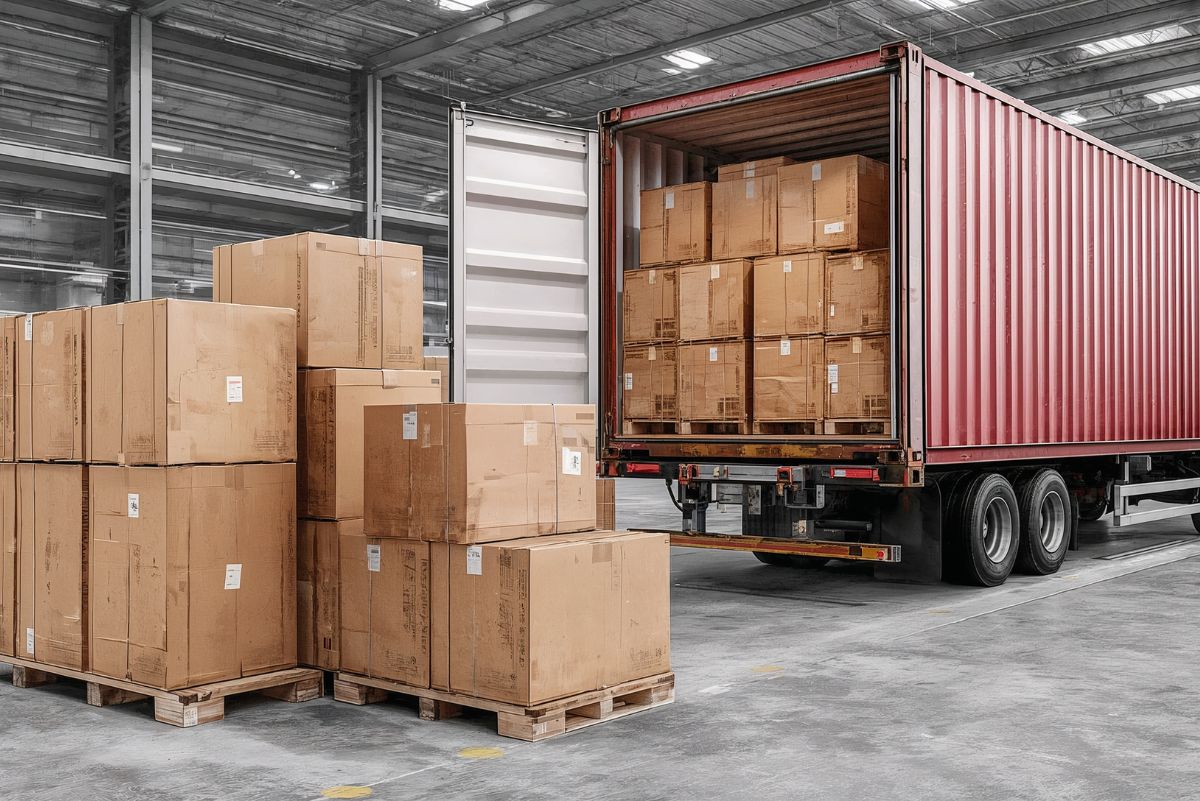
Transport cost is largely a function of how well volume is concentrated into efficient shipment sizes. Carriers price by weight, volume, and distance, but the relationship between shipment size and cost per unit is not linear. Small, frequent shipments cost disproportionately more per unit than large, consolidated ones because the fixed cost of moving a vehicle or container is spread across less volume. Shipment consolidation is the discipline of aggregating smaller flows into larger shipments that achieve better rates, higher vehicle utilization, and lower cost per unit delivered without extending lead times or compromising service commitments beyond what the network can absorb.
Why Shipment Consolidation Is Challenging
The difficulty is that consolidation opportunities are distributed across the network in ways that are not visible from any single vantage point. Flows from multiple origins to similar destinations may be consolidatable if they can be aggregated at a shared collection point before onward shipment. Flows to multiple destinations in a geographic cluster may be consolidatable if they can be batched into a single vehicle run rather than served by separate shipments. But consolidation always involves a trade-off: aggregating volume increases shipment size and reduces cost per unit but may require holding inventory longer at collection points, extending lead times, or accepting less frequent delivery than customers currently receive.
The network-level dimension adds further complexity. Consolidation decisions on one lane affect the volume available on connected lanes, the utilization of shared collection or cross-docking facilities, and the delivery frequency that customers in affected markets receive. These interactions make it impossible to evaluate consolidation opportunities accurately without a model that holds the full network simultaneously.
The Cost of Poor Consolidation
A network that is under-consolidated pays the cost of small-shipment pricing on flows that could be aggregated at acceptable service and inventory cost. That premium is paid on every shipment, every cycle, which means it accumulates continuously. Over-consolidation is the less common error but it carries its own cost: holding inventory at collection points to build shipment sizes increases working capital and can extend lead times beyond what service commitments allow. The right level of consolidation balances transport cost reduction against inventory and service implications, and that balance is different for every flow and every network.
Why Traditional Approaches Fall Short
Consolidation decisions in most organizations are made at the operational level by planners managing individual shipments or lanes. Consolidation rules are set at the lane level through carrier contracts or transport management systems, and they are rarely reviewed against the full network picture. The result is a consolidation structure that reflects the rules set when the contracts were negotiated rather than the optimal consolidation configuration for the current volume pattern and network structure. Opportunities to consolidate flows across lanes or across facilities are particularly likely to be missed because they require a network-level view that no single planning team has.
What Effective Shipment Consolidation Requires
Supply chain leaders need a model that can identify consolidation opportunities across the full network, evaluate the cost, inventory, and service implications of alternative consolidation configurations simultaneously, and find the consolidation structure that minimizes total transport and inventory cost while meeting service commitments across the customer base.
A Practical Approach to Shipment Consolidation
- Map current shipment patterns and identify under-consolidated flows. For each significant lane and origin-destination pair, document current shipment frequency, average shipment size, vehicle utilization, and cost per unit. Identify flows where shipment sizes are significantly below efficient consolidation thresholds and where the frequency of shipments could be reduced without breaching service commitments.
- Identify consolidation opportunities across the network. Look for flows that could be aggregated at shared collection or cross-docking points before onward shipment, delivery areas where multiple customer flows could be batched into consolidated vehicle runs, and lanes where volume from multiple origins could be combined to achieve better utilization and rates. Cross-lane and cross-facility consolidation opportunities are often the largest and least visible.
- Model the cost, inventory, and service implications of each consolidation option. For each consolidation opportunity, evaluate the transport cost reduction it delivers, the inventory holding cost of any additional dwell time at collection points, and the service level implications of any change in delivery frequency or lead time. Consolidation options that reduce transport cost but require inventory increases or service reductions that the margin or the customer base cannot absorb are not viable regardless of how attractive they appear on transport cost alone.
- Optimize the consolidation structure across the full network. Rather than implementing consolidation improvements one lane at a time, model the full network and find the consolidation configuration that minimizes total transport and inventory cost while meeting service requirements across all flows. Network-level optimization consistently identifies consolidation opportunities that lane-level analysis misses because it can find configurations where aggregating volume across multiple flows and facilities creates savings that no individual consolidation decision reveals.
What Strong Shipment Consolidation Looks Like
A well-consolidated network moves volume in shipment sizes that achieve efficient rates and high vehicle utilization without holding inventory at collection points longer than the service window allows. The consolidation structure reflects the current volume pattern rather than the rules set at the last contract negotiation, and it is reviewed regularly as volume patterns, service requirements, and carrier markets evolve.
Common Shipment Consolidation Pitfalls to Avoid
- Evaluating consolidation opportunities lane by lane rather than across the network. Cross-lane and cross-facility consolidation opportunities are often the largest and are only visible at network level.
- Optimizing transport cost without modeling inventory and service implications. Consolidation that reduces transport cost by holding inventory longer or extending lead times may not reduce total supply chain cost.
- Setting consolidation rules at contract time and leaving them unchanged. Volume patterns change continuously and consolidation rules that were optimal at contract signing may no longer reflect the most efficient configuration.
How AIMMS Supports Shipment Consolidation
AIMMS allows teams to identify and evaluate consolidation opportunities across the full network, modeling the transport cost, inventory, and service implications of alternative consolidation configurations simultaneously. The optimization tooling finds the consolidation structure that minimizes total supply chain cost while meeting service requirements, identifying cross-lane and cross-facility consolidation opportunities that lane-level analysis misses. For organizations with complex multi-tier distribution networks, specific service level commitments by customer segment, or consolidation decisions that need to be evaluated alongside inventory policy and network design simultaneously, AIMMS supports fully tailored solutions on the same optimization foundation.
“Consolidation reduces transport cost by spreading the fixed cost of a vehicle across more volume. The network that finds the most consolidation opportunities without extending lead times beyond what the service window allows wins on both cost and service simultaneously.”
The Outcome
Organizations that optimize shipment consolidation at network level achieve lower total transport cost, better vehicle utilization, and more consistent service performance than those that manage consolidation through fixed lane-level rules. The improvement comes from finding the consolidation configuration that performs best across the full network rather than the one that looks best on each individual lane.
Speak with AIMMS to explore how shipment consolidation can be optimized across your network, from ready-to-use applications to fully tailored solutions.