
Blog Post
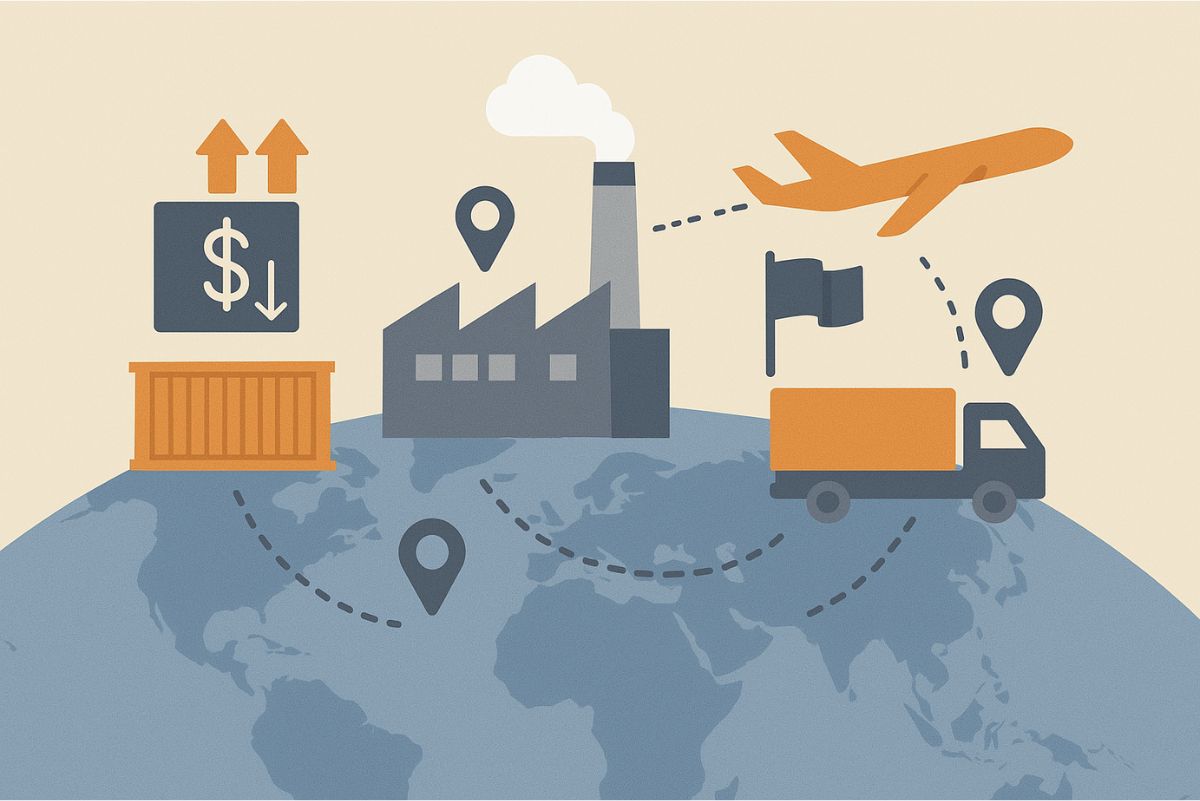
On October 28, the World Bank published its latest commodity outlook. For logistics and supply chains, the message is clear: costs are rising on almost every front and all at once.
The numbers show some dramatic moves. Energy is up 32%, oil supply is down by the most in four decades, and metals are at record highs. On top of that, oil is dragging other prices up with it.
You can’t stop these costs from rising, but you can decide how much they hurt. Which routes you run, which modes you use, where you hold stock: each of those choices now costs more. The companies that find the best answer fast and act on it first will close 2026 on target and start 2027 with confidence. A dashboard shows you the problem, but optimization finds the best plan your constraints allow.
The numbers
Here are the main figures from the World Bank.
- Energy: prices are set to rise 32% in 2026, ending three years of decline.
- Fuel: Brent crude is forecast at $91 a barrel, up from $69 last year. In the World Bank’s adverse scenario, it could average $105 in 2027.
- Supply: global oil supply is falling by 5.2%. That’s the sharpest drop in more than four decades outside the 2020 recession.
- Metals: prices are up 25%, with aluminum, copper and tin all at record highs.
- Food and fertilizer: food commodities are up 10% this year and another 7% next year. Fertilizer is up 14%.
For economists, this is a forecast. For logistics, it’s what you pay per mile, per pallet and per promise to your customers
One shock doesn’t stay in its lane
The most important finding is in the report’s special focus. When markets are under stress, price swings spread from one commodity to the next. Oil has become a bigger driver of that since the Middle East conflict began.
The World Bank’s Ayhan Kose sums it up: “Commodity markets are being hit by several major shocks at once.”
That’s a real problem if your plans were built for a calmer world. Most supply chain planning still runs on annual network reviews, spreadsheet what-ifs, and tools that explain what already happened. That works when costs move slowly and one thing goes wrong at a time. But it doesn’t work now.
Plenty of platforms can show you a dashboard of rising costs. Far fewer can tell you what to change, by when, and what it costs you if you don’t. Fewer still let an AI agent run that analysis for you, across your whole network.
What supply chain leaders need now
- Enterprise-scale scenarios, in hours. Put the World Bank’s baseline and adverse case side by side. Then test hundreds of variations across your full network. What do $91 and $105 oil mean for your lanes, your modes and your warehouse footprint?
- An AI agent that does the heavy lifting. Ask what changes if Brent hits $105. The agent sets up the scenario, runs it and explains the trade-offs in plain language.
- Trade-offs you can see. Cost, service and resilience pull in different directions. Optimization shows you the best balance within your constraints.
- Plans that keep up. Re-optimize when prices move, not when the next budget cycle comes around.
How AIMMS helps
Our SC Navigator is a supply chain network design and scenario optimization tool. It models your whole network, from suppliers to customers, and tests it against many cases at once. Ask Sensai, our AI agent, a question like “What if Brent hits $105?” It sets up the scenario, runs it across your full network and explains the trade-offs. You see which moves protect margin without hurting service. So when the next price shock hits, you’re not scrambling. You’ve already tested your response.
The bottom line
Supply chain margins were never generous. In 2026 they’re under pressure from every side. Delivering will get harder. Deciding doesn’t have to.
“The price of a barrel is not in your control. How fast and how well you respond is.”
Want to see how the baseline and adverse cases play out in a network?